


The Gyroscopes lesson gives an introduction to gyroscopes, their history and importance. The lesson contains information about the place of gyroscopes in rocketry and provides activities to understand how a gyroscope works.

This course gives an overview of the cosmos and the discoveries that have been unlocked.

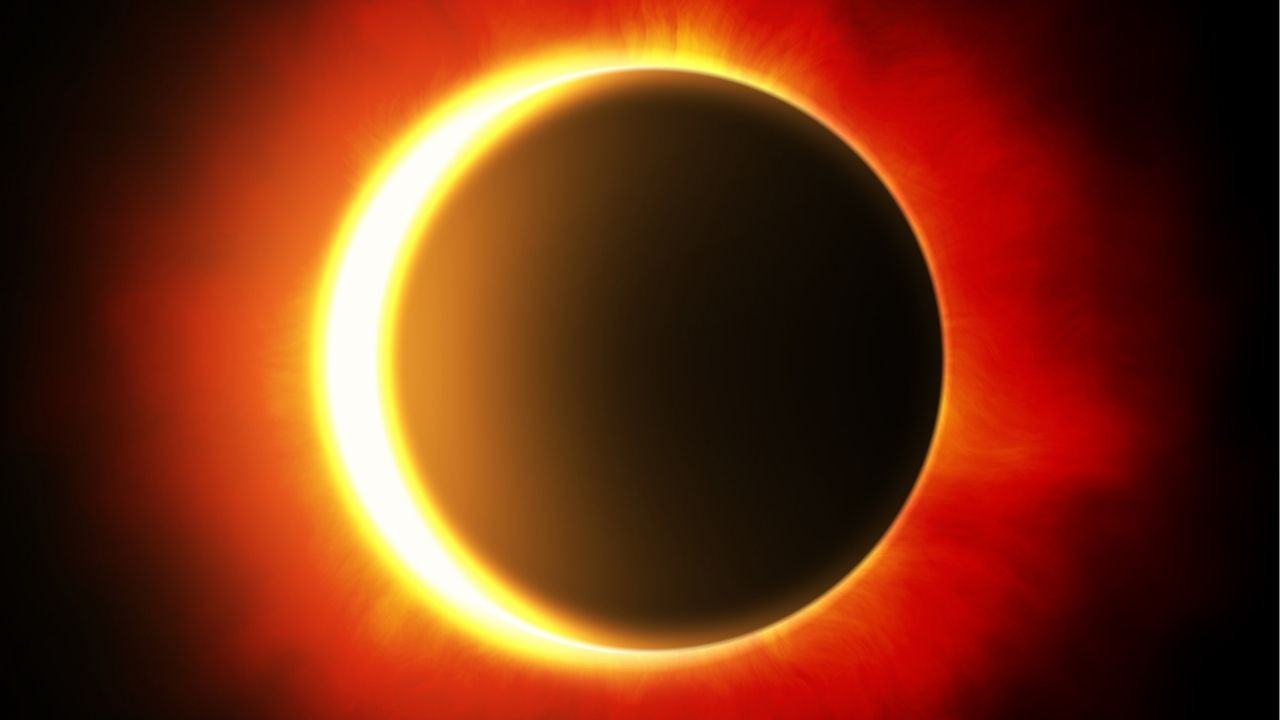
Every once in a while, the sun just completely disappears for a short period of time, even on sunny days. Before there was a lot of cool astronomy and science out there, ancient civilizations had no idea what was happening in the sky! They thought a wild animal had eaten the sun! How scary do you think that would be?
- Teacher: Alice Hoffman
- Teacher: Suzanne Monir

In this project, students become cultural astronomers. They take a survey about the moon; draw images or take digital pictures of the moon once a week or more at approximately the same time each evening for one month to get the full cycle. After posting their images with time, date, latitude, and longitude, students research and compare each others' images of the moon; create more web pages that include poetry, history, beliefs, stories, and research. Students use dialogue, comments, and discussion to share their valuable insights.
The project ends with a final survey and sharing reflections. Students receive iCollaboratory/Kidlink/SpacEdge Web Badges and certificates for completing each of the four sections of the project. Students also receive a certificate for completing all four sections of the project.
Grade levels: 5-12
Short Description: August 21, 2017, a solar eclipse is going to be showing across the United States.
This Cybrary includes some wonderful links to many many activities.
- Teacher: Natalie Orrantia
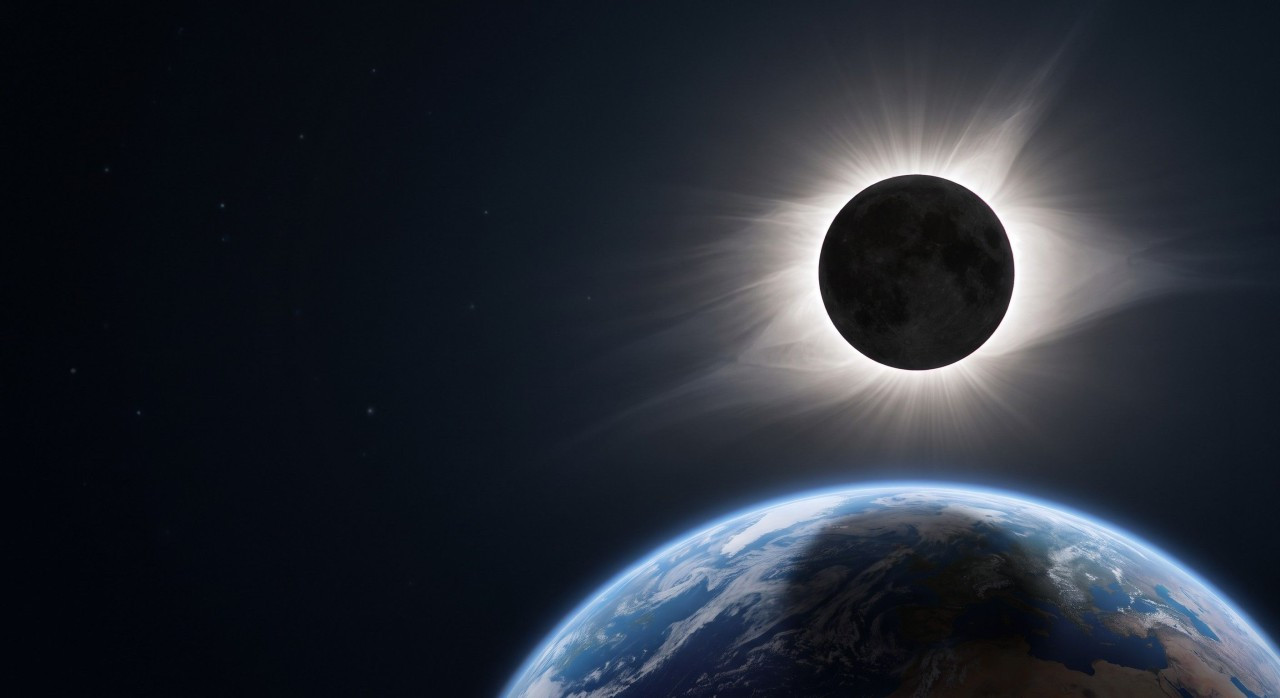
In this project, students will be completing activities to learn more about the phenomenon of solar eclipses
- Teacher: Riley Hamilton
- Teacher: Kimberly Tran
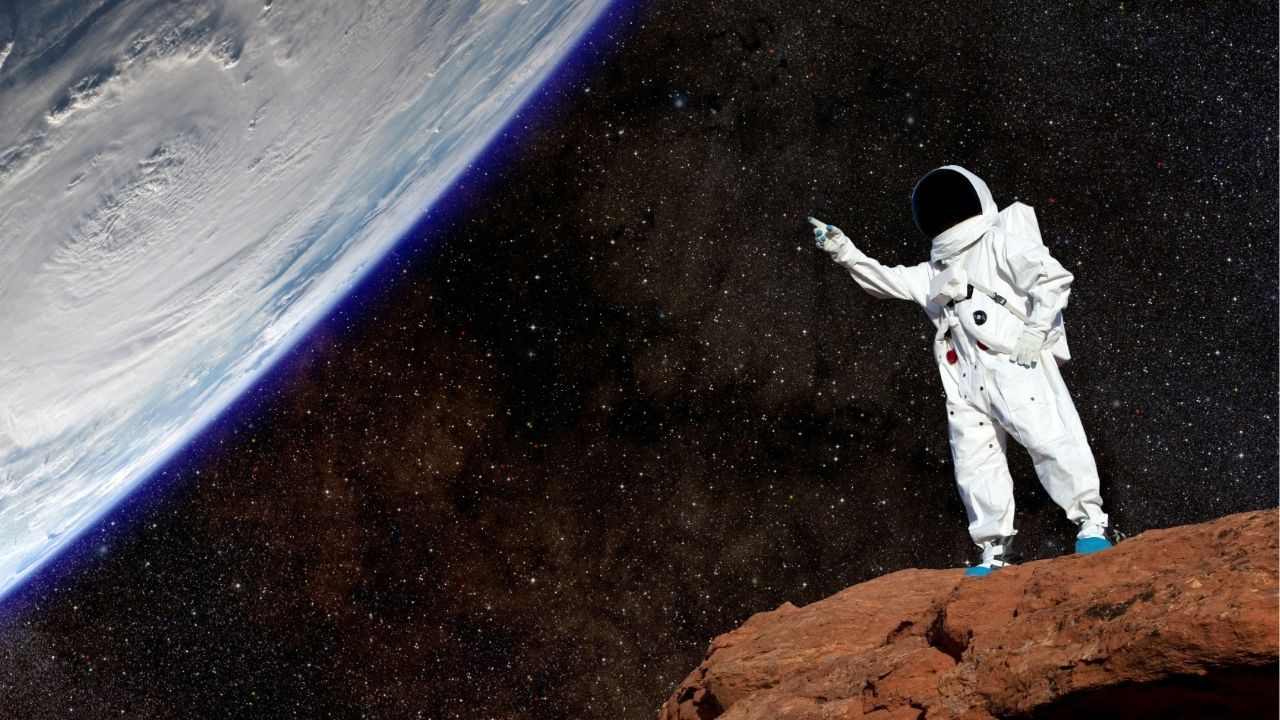
This project is made possible by awarded funding support for "How Big is Earth" from IAU-OAD under Task Force 2: Children and Schools. The International Astronomical Union (IAU) is the largest body of professional astronomers in the world and has set up the Office of Astronomy for Development (OAD) in partnership with the South African National Research Foundation.
Using only the sunlight striking the Earth and a wooden dowel, students can measure the circumference of the earth. Eratosthenes did it over 2,000 years ago. In Cosmos, Carl Sagan shared the process by which Eratosthenes measured the angle of the shadow cast at local noon when sunlight strikes a stick positioned perpendicular to the ground. By comparing his measurement to another made a distance away, Eratosthenes was able to calculate the circumference of the earth.
This project meets standards for Math, Science, Reading and Geography.
Students receive buttons for each activity.
- Teacher: Theresa Allen
- Teacher: Pia Avolio de Martino
- Teacher: Felipe Carasso
- Teacher: Joyce Fisher
- Teacher: Hongfeng Guo
- Teacher: Riley Hamilton
- Teacher: Stellan Kinberg
- Teacher: Linda Smentek
- Teacher: Bonnie Thurber
Written by: Frances Dellutri, - NSS Director of Education
Contributor: Czar Dickson - University of Chicago Intern with NSS
Topic: Art, Astronomy
Title of Lesson: Fly Me to the Moons - Middle School
Grade (Age) Level: Grades 5-8 (Ages 10-13)
SpacEdge Academy Categories: Engineering Design Process, Space Problem Solving, Algebra, Geometry, Modeling & Simulation, Planets & Moons, Physical Properties, Materials Science, Planetary Geology
US Standards: NGSS:
MS-ESS1-3 http://www.nextgenscience.org/dci-arrangement/ms-ess1-earths-place-universe
Introduce students to scale models with this lesson plan. Students engage in different model perspectives and finally focus on making a model of one of our solar system's moons with features that are to scale.
- Manager: Stephanie Alexander
- Manager: Frances Dellutri
- Teacher: Riley Hamilton
- Teacher: Natalie Orrantia
- Teacher: Frances Dellutri
- Teacher: Riley Hamilton
- Teacher: Natalie Orrantia
Only three countries in the world do not use the metric system - the United States, Liberia, and Myanmar. How does the metric system compare to the US Measurement system? (This will be revised)
- Teacher: Riley Hamilton
- Teacher: Natalie Orrantia
- Teacher: Linda N. Smentek
- Teacher: Kimberly Tran
